
Game ideas for children and teenagers on the train
From shared stories to puzzle sessions
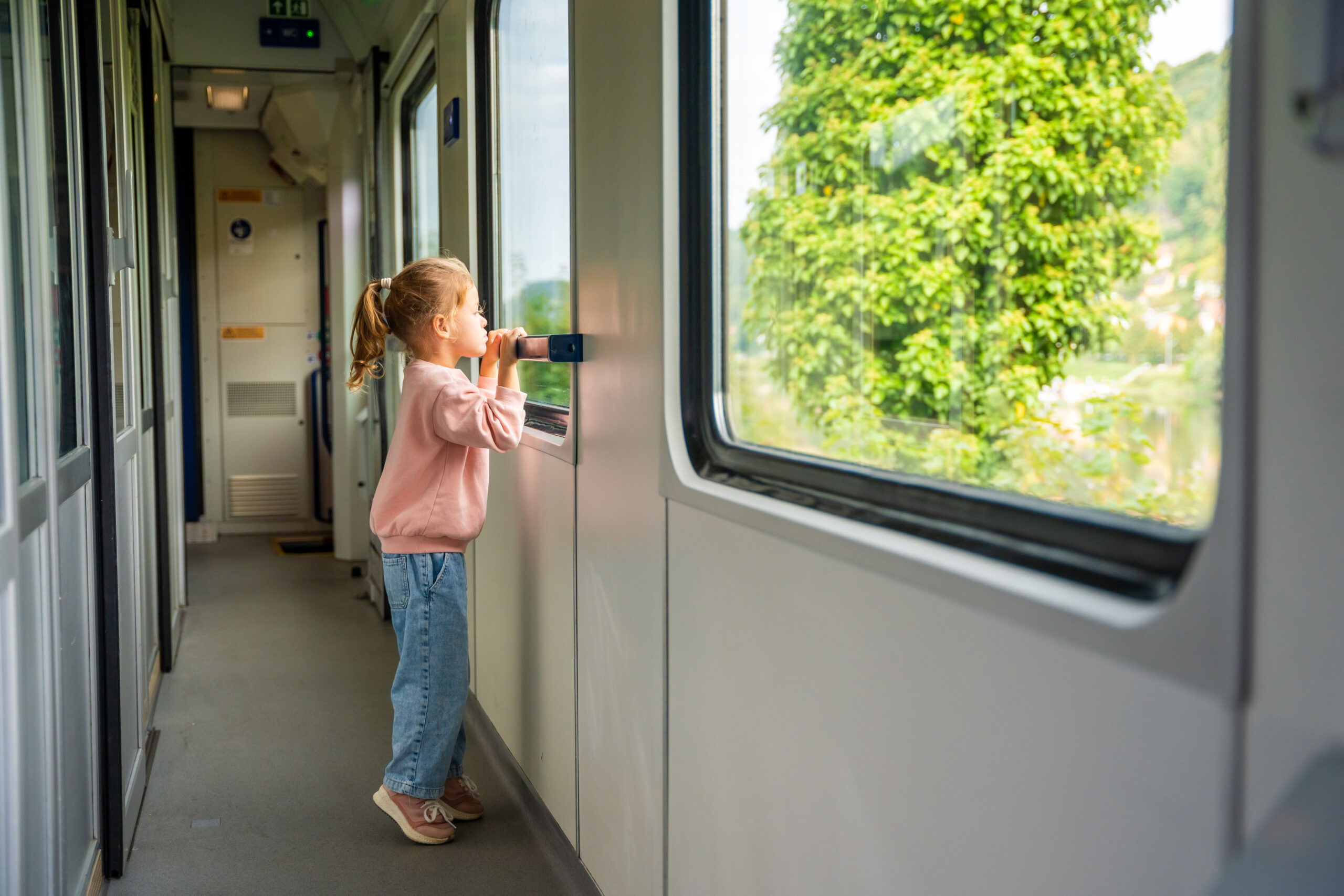
Planning a train trip with children can be an exciting way to spend time together, discover new places, and create unforgettable memories. To ensure the journey is enjoyable and entertaining for everyone, it's a good idea to prepare some creative games and activities to keep the children occupied. Depending on the children's ages, there are various games and activities that can enhance the travel experience. Of course, games like "I Spy" and "I Packed My Suitcase..." immediately come to mind, but there are so many more ways to keep children entertained on a train journey.
Kindergarten/daycare children
Playing together
Telling stories: Each child takes turns contributing a line or paragraph to a shared story. This can lead to a funny and wacky narrative.
Animal sound puzzle: One player imitates an animal sound (e.g., a chicken, a cat, or an elephant), and the others have to guess which animal it is.
Creativity and fun
Painting and crafting: Bring drawing paper, pencils, stickers, or craft supplies so the children can get creative. They can make drawings for the train journey or create small art projects.
Find the monster: This game can further motivate children to use paper and pencil. Each child receives a pencil and a piece of paper. Each child draws a few lines on their paper. Then the papers are exchanged, and the children try to draw a monster using the lines.
Paper airplane competition: The children can fold paper airplanes and then, upon arrival at their destination, hold a competition to see which one flies the farthest.
elementary school children
Playing together
Yes/No Game: One person in the group asks questions; the others are not allowed to answer any of these questions with "yes" or "no", but they are also not allowed to lie.
What is that? : A child gets up, takes out their phone, and photographs an object in the train carriage. Ideally, they should take the picture so close that it's hard to see. Then the others have to guess what it is.
Telling stories: Even older children can enjoy this game, especially if you adapt it slightly. Each player thinks of a word beforehand (e.g., toilet flush, garden shovel). The more unusual the word, the funnier it is. The game works the same as described above (for kindergarten children), except that when it's your turn, you have to include your chosen word.
Crazy fairytale world: Tell each other fairy tales, but with surprising twists, changed details, or modernized versions. (For example, Little Red Riding Hood stops in the woods because she has better cell service there when she encounters the wolf.)
Game at the table: In the family compartment of the Austrian Federal Railways (ÖBB), you'll find a game already printed on the tables. Game pieces can be collected from the train attendants. However, since they are often difficult to find, it's recommended to bring your own.
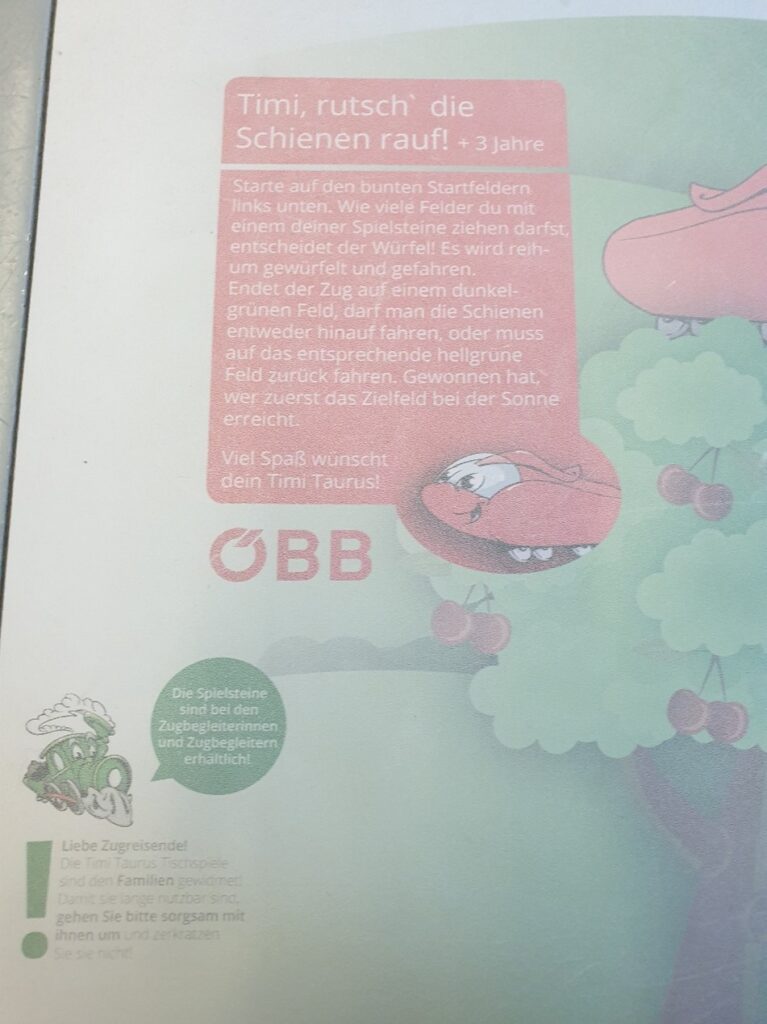
Source: Photo Claudia Otter
Thinking and Puzzles
Wordplay: Games like "word chain" or "rhyme game" promote the cognitive development of children and provide lots of fun.
Puzzles and detective games: Prepare puzzles or detective games where the children have to collect clues and solve a "mystery".
Color guessing: One person thinks of a color and names an object (it doesn't have to be in the room/train) that has that color, as well as a few other colors. Then the other players name other objects that contain one of those colors to try and figure out which color the person is thinking of. (For example, Person A thinks of white and says: Zebra. Person B then says: Raven? Person A denies it, and Person B says: Snow? That's correct!) This game can also be limited to specific categories. (For example, animals, plants, things on the train)
Commissioners: One person is the suspect, everyone else is a detective. The detectives observe the suspect very closely for a short time. Then they close their eyes, and the suspect changes one or more things (decide beforehand how much they will change). Afterward, the detectives open their eyes again and guess what has changed (e.g., removing an earring, unbuttoning a button).
Tongue twister game: Try reciting a tongue twister as quickly as you can. Who is the fastest? Who makes the most mistakes? Here are a few tongue twisters for inspiration:
- Small nutcrackers crack crisply. Large nutcrackers crack even more crisply.
- It makes a rattling sound on a rickety folding bike.
- Busy bees fly swiftly on shimmering bicycles.
Learning and knowledge expansion
Wordplay: Games like "word chain" or "rhyme game" promote the cognitive development of children and provide lots of fun.
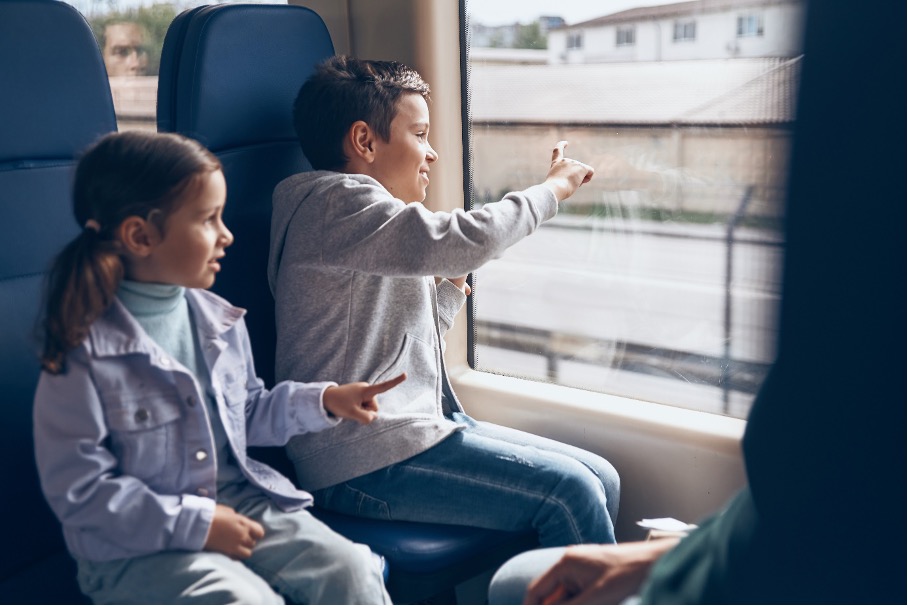
youth
Competitions and challenges
Classic travel game: City, Country, River. You can either buy a pad with pre-defined categories or simply write down the categories you want to play yourself. You could also come up with creative categories related to the trip (e.g., items on the train, our destination, cycling trip).
Music playlist competition: Let each child take turns choosing a song and create a shared music playlist for the ride. At the end of the trip, the others can vote on which song was the best. You can also use the playlist later as a motivational playlist while cycling.
Car/Train Bingo: Create bingo cards with objects you might see on the trip (e.g., a red car, a cow, a train, a town sign). The children mark the objects on their cards as they see them.
Creative entertainment
Tell fantasy stories: Start a story together and let the children take turns adding sections. You can talk about adventures in faraway lands, space travel, or magical encounters.
Who am I? : There are two variations of this game. Variation 1: Everyone gets a Post-it note and writes the name of a famous person or someone they know on it, then passes it to another person. That person isn't allowed to see the name and sticks the Post-it note to their forehead. The game continues in a round-robin format, with each person asking yes/no questions about themselves. They can keep asking questions until they receive a "no" answer. The first person to guess correctly wins. Variation 2: One person covers their ears, and the others agree on a person. Then, the person who covered their ears has to guess who it is by asking yes/no questions.
Learning and communication
Film or book discussion: Encourage the teenagers to talk about their favorite books or movies, and discuss characters, plots, and themes together.
Ending words is forbidden: The first person says a letter, for example, K. The next person adds another letter, like KI. This continues until one person has completed a word (here: KIND, for example). That person loses. But be careful: if you add an I to an E, for example, because you're thinking of the word EIWEISS (protein), but EI is already a word in its own right, you lose.
Stage packages
This requires some preparation. For example, you take small matchboxes or other small bags and put small items or treats inside (e.g., raisins, a small toy, a small picture puzzle). Then you devise a system for how often the children receive a new package (e.g., every 50 kilometers, every 30 minutes, at each new train station).
It's your turn!
Now it's your turn! To ensure your next trip is a fantastic experience for you and your children, choose games that match their interests and ages. Let us know in the comments which games are the most popular with you. Snacks, movement breaks, and fun games aren't just important for keeping spirits up on the train. And many of the ideas in this post also work on a bike 😉 – share your tips and questions!
Links and sources:
- Travel games for children: 10 ideas for train & car (stadtlandtour.de)
- Travel games for children | Famigros
cyclebeeOnRails – Your partner for taking your bicycle on the train
Want to travel comfortably and flexibly by bike and train? Then "cyclebeeOnRails" is the answer for you. Here we offer official data on connections and train stations, which you can supplement with comments, tips, and reviews. Over time, your feedback will create a vibrant knowledge platform for everyone who enjoys combining cycling and train travel.
- Europe-wide
- Bicycle transport
- Family
- Freerun Podcast
- Baggage
- magazine
- With children
- News
- Specials
- Sporty
- Worldwide
About the author
Claudia Otter studied Management of international business processes Claudia studies at FH Joanneum. She is currently completing a marketing internship at cyclebee. Her bicycle is her favorite mode of transport, which she uses for her daily commutes. If a journey is ever too far to cover by bike alone, she combines it with train travel.